
Categories
-
ANU Africa Network
Posted on
by
This website was established in 2013 by David Lucas, and renovated and relaunched in 2020 as part of a project to increase awareness of Africa and African studies in the ANU and the ACT, funded by the Australian Government’s Department of Foreign Affairs and Trade.
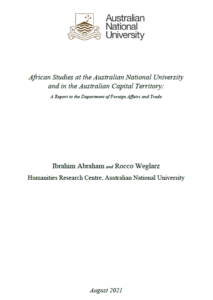
Another outcome of that project was a major research report, published in August 2021, African Studies at the Australian National University and in the Australian Capital Territory, analyzing the past, present and future of the study of Africa at the Australian National University and the wider Australian University sector.
The major innovation on this updated website is the creation of the ACT Africa Expert Directory which lists experts on Africa from institutions around the ACT, primarily the ANU. We will continue to curate this list, offering a key resource for media, government and non-government organizations seeking expert facts and opinions on Africa. Individuals can request to be added to the list by contacting the website managers.
Another notable addition is the expanded directory of PhD theses on Africa produced in the territory’s universities, a solid measure of the vitality of the study of Africa in the city of Canberra.
Reviewing these directories, it is revealing to note that the vast majority of research on Africa is produced by disciplinary experts (environmental scientists, economists, demographers, etc.) rather than area studies experts. This means that the study of Africa is woven into the fabric of the research culture of the ANU and the ACT’s other universities in ways that are not necessarily apparent.
-
The 2016 Zambian Elections and the Role of the International Community
Posted on
by
African Studies Reading Group, Thursday 21 November 17:00
Lady Wilson Room, Sir Roland Wilson Building, 120 McCoy CircuitTHE 2016 ZAMBIAN ELECTIONS AND THE ROLE OF THE INTERNATIONAL COMMUNITY
 Zambia had long been hailed as a model in the region so hopes were (naively) high that the 2016 presidential election was going to be undertaken in the true spirit of democracy – but that was not to be. This presentation describes how various actions taken by the ruling party appeared to have been copied directly from a “Dictator’s Handbook” on “how to rig an election”, just as used in other countries, including Uganda and Zimbabwe. A charade was played out, of pretending to follow international standards while at the same time, and often in plain sight, many blatant irregularities and major transgressions against accepted electoral practices occurred. There were also abuses of constitutional processes after the elections. The result was the end of the Rule of Law in Zambia.
The role of the international community before, during and after the elections is described and analysed and an attempt is made to explain why observer mission “referees” handed out the equivalent of “yellow” and even “green” cards, in stark contrast to the international commentators who produced “red cards”. It was as if they had officiated at different games.
Margaret O’Callaghan is a Canberra-based independent scholar, former Visiting Fellow at ANU’s Crawford School of Public Policy and a former United Nations Population Fund representative to Zambia.
All welcome. Refreshments provided.
-
“Now I am Dead”: Anthropological Encounters with the Other
Posted on
by
WEDNESDAY 04 DEC 2019, 5:30pm–7pm, Lady Wilson Room (2.10)
Sir Roland Wilson Building (#120), ANU
(Note change of date to Wednesday 04 December at 5:30pm)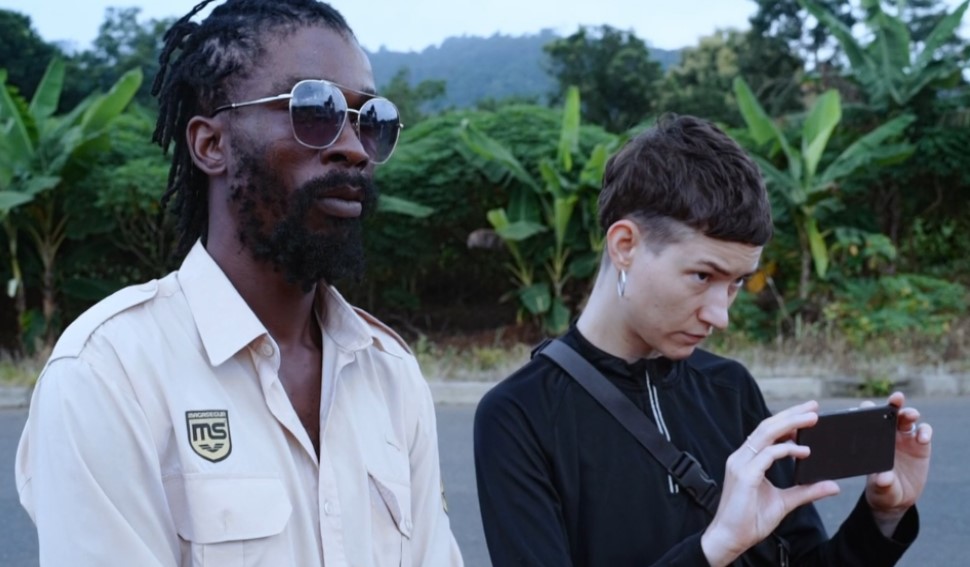
Now I am Dead (2018) dir. by Philipp Bergmann “If anthropology is founded on the violence of speaking for others,” anthropologist Isabel Bredenbröker asks in the thought-provoking short film Now I am Dead (2018), “then how can I relate to this?”
Bredenbröker and film director Philipp Bergmann had planned an artistic video installation to explore the nature of the ethnographic encounter through the lens of her research on death in a small town in Ghana. But in the midst of filming, Isabel’s grandfather dies in Germany. Asking the people she encounters for advice about how to react to the death of a far-away family member whilst shooting a film on death in West Africa, the perspective of the foreign researcher is tragicomically inverted and incorporated into a local perspective. The distinctions between the other culture and one’s own, between the Other and the Self get blurred, just as the threshold between life and death becomes something that can be experienced in a playful way.
“This is absurd,” Bredenbröker declares, “but in its absurdity, it makes perfect sense.”
About the presenter: Isabel Bredenbröker is a PhD candidate in the Research Training Group of Value and Equivalence at Goethe University, Frankfurt. Trained as an anthropologist, her research considers the material and economic aspects of death in the Volta Region of Ghana.
Coinciding with the annual conference of the Australian Anthropological Association, the Freilich Project is pleased to host the screening of this unique short film, and a discussion on the perennial challenges of ethical encounters between individuals and cultures in social scientific research.
Please register for catering purposes.
-
Robyn Alders renews link with ANU
Posted on
by
Robyn Alders renewed her link with the ANU in April, 2019
From https://www.researchgate.net/profile/Robyn_Alders
‘Robyn Alders currently works as a Senior Scientific Advisor at the Centre on Global Health Security at Chatham House, is an Honorary Professor with the Development Policy Centre at the Australian National University and Chair of the Kyeema Foundation. Her current research and development interests include: linkages between food and nutrition security and health security, gender equity, planetary health and science communication.’Robyn obtained her PhD in Veterinary Immunology at ANU in 1989 before working at the University of Zambia. Her later African experience includes Mozambique and Angola.