
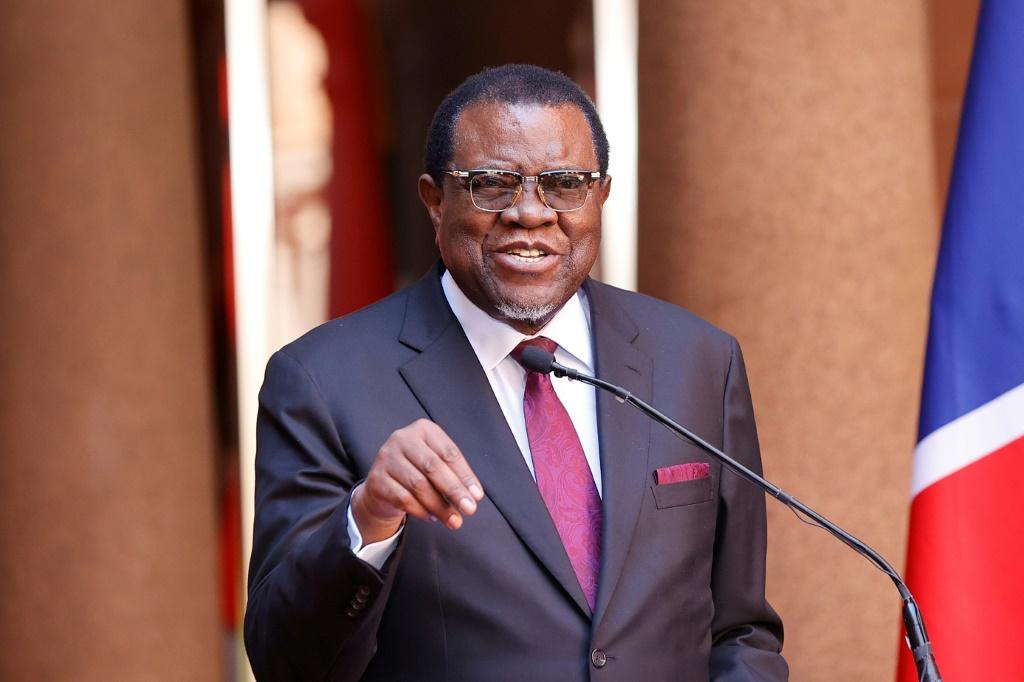
Namibia is plunged into sorrow as the nation mourns the passing of President Hage Geingob at the age of 82. Having led the country since 2015, President Geingob succumbed to cancer at the Lady Pohamba Hospital in Windhoek, where he had been undergoing treatment.
In reflection of this significant loss, we extend our heartfelt condolences and hope that the departed president finds rest.
What do we know about Namibia?
Namibia’s rich political history encompasses its colonization by Germany in 1884, followed by occupation by South Africa in 1915. After World War II, South Africa annexed the territory and administered it as a mandate until 1988. The journey to independence was marked by the SWAPO guerrilla group’s war of independence, culminating in Namibia gaining its sovereignty in 1990.
SWAPO, now the ruling party, has transitioned from its Marxist roots over the years. President Hage Geingob assumed office in 2015, succeeding Hifikepunye Pohamba, who had served two terms. Geingob’s initial landslide victory in 2014 was followed by his reelection in 2019, albeit with a reduced majority. This marked a shift, as SWAPO narrowly lost its parliamentary supermajority in the same elections.
As we reflect on Namibia’s current state, the nation boasts a population of approximately 2.7 million (2023 est.), with an urbanization rate of 54.9% and a life expectancy of 63.7 years (2023 est.). The GDP stands at $12.372 billion (2019 est.), with a per capita income of $9,100 (2021 est.). According to the World Bank, Namibia is an upper-middle-income country. Namibia achieved this through its resource wealth (mostly gold and uranium), political stability, and sound macroeconomic management. A 2023 ranking by Yahoo Finance put Namibia 12th among the richest countries in Africa by GDP per capita.